
Single-Ply Systems
PVC & EPDM Roofing
Chemical resistance. Temperature resilience. Proven over decades. Two systems engineered for specific commercial demands.
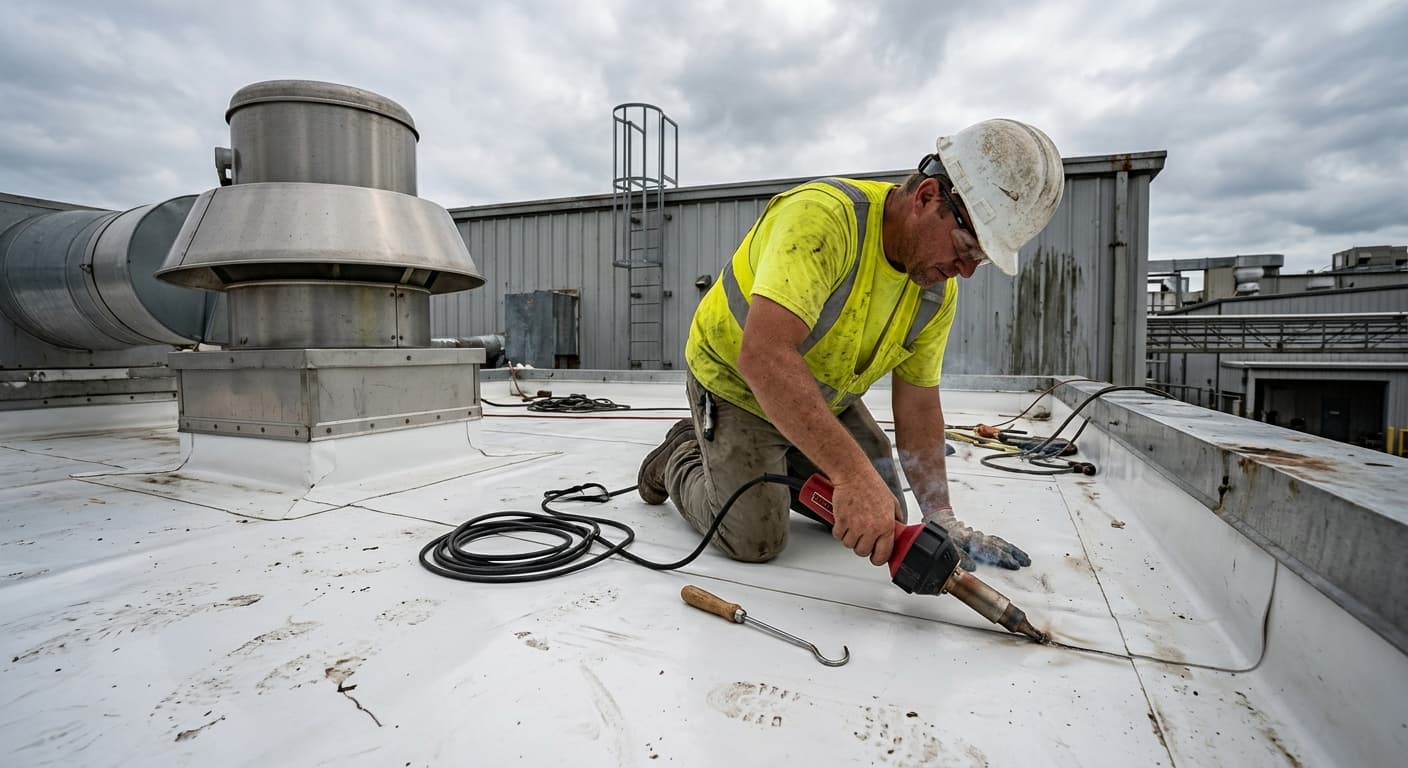
PVC Roofing
Chemical Resistance Built In
PVC (Polyvinyl Chloride) is a heat-welded single-ply membrane with one distinct advantage over other systems: superior resistance to oils, greases, chemicals, and biological contaminants. It's the preferred choice for restaurants, industrial plants, and any facility with chemical exhaust at roof level.
PVC membranes are reinforced with polyester scrim for dimensional stability and welded with hot air, creating seams that test stronger than the base membrane. The plasticizers used in PVC can migrate over time, but premium-grade PVC with PVDF-modified formulas significantly extends service life.
PVC Quick Specs
EPDM Quick Specs
EPDM Roofing
50 Years of Proven Performance
EPDM (Ethylene Propylene Diene Monomer) is a synthetic rubber membrane with the longest commercial roofing track record of any single-ply system: over five decades. It's been tested in every climate, on buildings of every type, and continues to be a reliable, cost-effective option.
EPDM's outstanding flexibility and elongation (300%+) allow it to accommodate building movement and thermal cycling without cracking. It performs well in temperature extremes and is naturally resistant to UV and ozone without special coatings or additives.
The traditional limitation of EPDM is its seam system: adhesive seams require precision installation and periodic maintenance. Modern tape-applied seam systems have improved reliability significantly, and Seal Top follows manufacturer installation standards on every application.
PVC vs. EPDM: Side-by-Side
| Attribute | PVC | EPDM |
|---|---|---|
| Chemical Resistance | Excellent | Fair |
| Seam Strength | Heat-welded (superior) | Adhesive/tape (good) |
| Energy Efficiency | White reflective | Black (limited) |
| Temperature Range | -40°F to 250°F | -40°F to 300°F |
| Flexibility | Good | Excellent |
| Longevity | 20 to 30 yr | 15 to 25 yr |
| Best Climate | Southeast (hot) | All climates |
| Best Use | Restaurants, industrial | Large flat roofs, budget-sensitive |
Best Applications for PVC & EPDM
- Restaurants and commercial kitchens with rooftop grease exhaust (PVC)
- Food processing and manufacturing plants with chemical exposure (PVC)
- Large low-slope roofs where long service life is the priority (EPDM)
- Buildings with structural movement or wide temperature swings (EPDM)
- Re-roofing projects with complex details that need a flexible membrane (EPDM)
- Owners who want a long field track record behind the membrane
Our PVC & EPDM Installation Process
Roof Assessment
Infrared scan where applicable, core samples, and deck inspection. We confirm the existing assembly before a specification is written.
System Specification
We select PVC or EPDM, the membrane thickness, and the attachment method based on the building use, chemical exposure, and local wind uplift requirements.
Substrate Preparation
Wet or damaged insulation is replaced, and new insulation and cover board are installed and fastened.
Membrane Installation
PVC seams are hot-air welded and probed. EPDM seams are joined with primer and seam tape to the manufacturer's specification.
Detailing
Flashings, penetrations, edge metal, and drains are completed to manufacturer detail requirements.
Final Inspection & Warranty
Manufacturer inspection where the warranty requires it. Warranty registered in the owner's name and a full documentation package delivered.
Common Questions
Frequently Asked Questions
Which is better for my building, PVC or EPDM?
It depends on your building's specific demands. PVC is the better choice if your roof is exposed to chemical exhaust, grease, or biological contaminants, such as restaurants, food processing, or industrial facilities. EPDM is the better choice for large flat roofs where budget is a priority, or in applications where extreme temperature flexibility is needed. Both are excellent systems when properly installed. We'll assess your building and recommend based on actual requirements, not margin.
Why is PVC recommended for restaurants and industrial facilities?
PVC's chemical formulation makes it resistant to oils, grease, fats, and a wide range of industrial chemicals that degrade other membranes. EPDM and TPO are vulnerable to petroleum-based contaminants, contact with grease-laden exhaust from rooftop kitchen vents can cause those membranes to swell, blister, and delaminate. PVC is specifically engineered to resist these exposures, making it the standard specification for food service and chemical-processing facilities.
How long does EPDM last in hot Southeast climates?
EPDM has a documented 40 to 50 year service life and performs well in Southeast heat because it's inherently UV and ozone resistant without special additives. Its black surface does absorb heat, which can slightly increase cooling loads compared to white membranes, though white EPDM is available. Properly installed EPDM in Georgia and Florida routinely reaches 20 to 25 years before requiring significant maintenance.
Can EPDM seams be repaired without replacing the entire roof?
Yes, EPDM seam repairs are straightforward when performed correctly. Adhesive tape systems allow for reliable lap repairs on failed seams without full membrane replacement. As long as the field membrane is intact and the substrate is dry, targeted seam repairs can extend the roof's service life significantly. We recommend an infrared scan to confirm there's no hidden moisture before committing to repair vs. replacement.
Is PVC roofing significantly more expensive than TPO?
PVC is a premium-tier option and costs more than TPO. However, for applications where PVC is appropriate, chemical exposure, grease resistance, fire rating requirements, the cost difference is justified by performance life and avoided liability. For a standard commercial flat roof without chemical exposure, TPO usually delivers better value.
PVC or EPDM: We'll Help You Choose
Our team will assess your building and recommend the right system based on your requirements, not just price.
7am, 7pm | Mon, Sun | 24/7 Emergency Response Available